FABRIC / BUYING GUIDE
WHAT IS A HEAVYWEIGHT T‑SHIRT?
The weight, the feel and the trade-offs, so you know when a heavy tee is worth it and when it is not.
07 MIN READ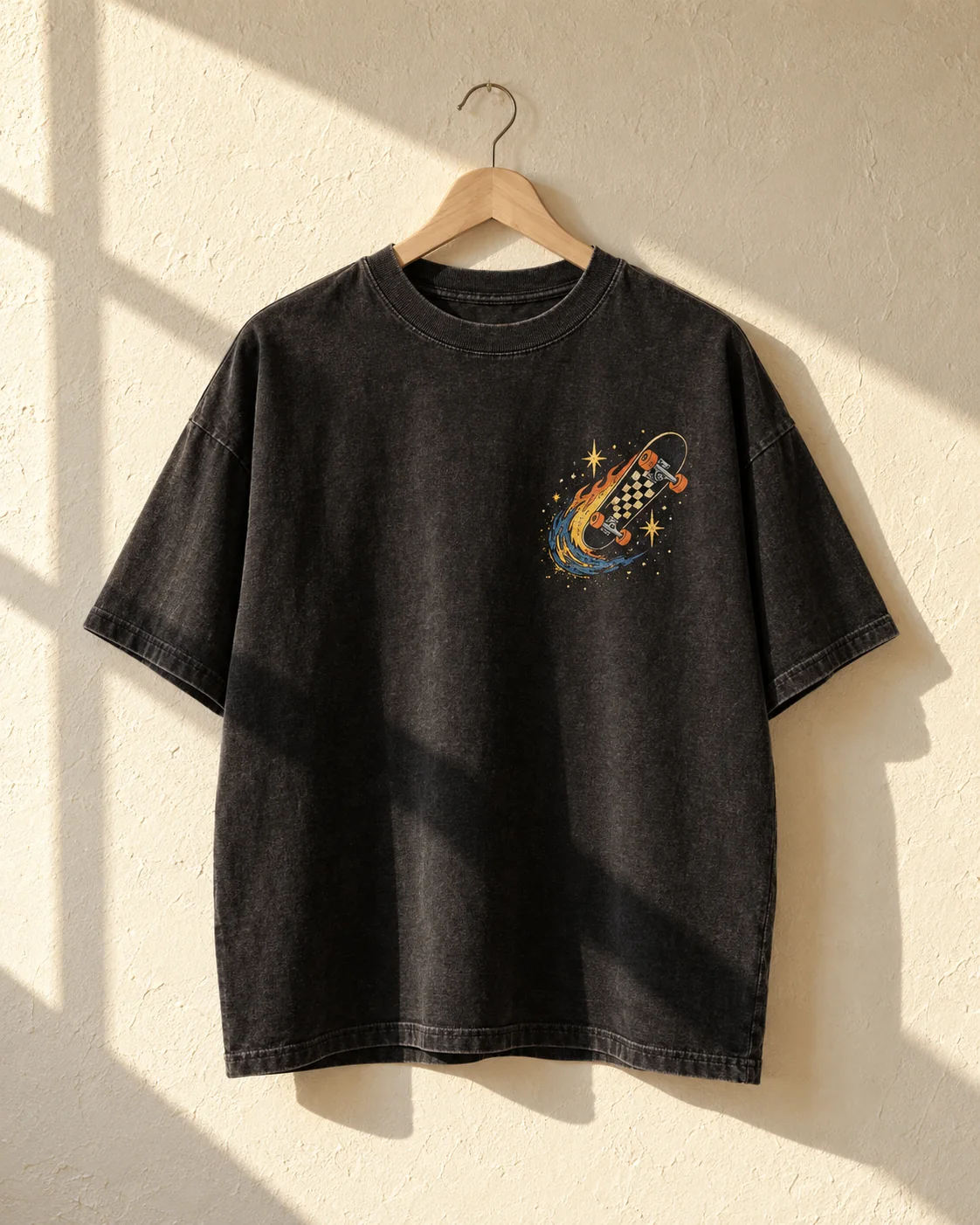
THE SHORT ANSWER
A heavyweight T-shirt is usually made from cotton jersey of about 200–240 GSM or more (roughly 6–7 oz per square yard). It feels denser, hangs straighter, covers better and holds a print well, but it is warmer and slower to dry.
How T-shirt weight is measured
T-shirt weight describes the fabric, not the finished shirt. Most brands quote it in GSM (grams per square metre). Many US brands use ounces per square yard. They measure the same thing: 1 oz per square yard is about 33.9 GSM, so a 6 oz tee is roughly 200 GSM.
SWIPE THE TABLE TO COMPARE →
| GSM | oz / sq yd | Usually called |
|---|---|---|
| 140–150 | 4.1–4.4 | Lightweight |
| 160–190 | 4.7–5.6 | Midweight, everyday |
| 200–240 | 5.9–7.1 | Heavyweight |
| 250–300 | 7.4–8.8 | Ultra-heavyweight |
| 300+ | 8.8+ | Super heavy, almost overshirt territory |
There is no official cut-off, and brands use the label loosely. As a rule of thumb, a tee starts to feel heavyweight somewhere around 200 GSM, and the classic streetwear heavyweight sits in the 220–260 GSM range. For the full weight map, see our guide to the best GSM for a T-shirt.
What a heavyweight tee feels like
- Dense and substantial. You notice it in the hand. The fabric has body rather than flopping.
- Straighter drape. It hangs away from the body instead of clinging, which is why heavyweights suit boxy and oversized cuts.
- Better coverage. Thicker knit is more opaque, so white and cream tees show less through them.
- A firmer collar. Heavyweights are often paired with a thicker rib neck that holds its shape longer.
- Warmer. More fabric means more insulation. Great for layering in a Canadian spring, less fun in a humid summer.
Heavyweight vs regular: the trade-offs
SWIPE THE TABLE TO COMPARE →
| Regular (150–190 GSM) | Heavyweight (200–260 GSM) | |
|---|---|---|
| Drape | Soft, follows the body | Structured, stands away |
| Opacity | Can be see-through in light colours | Covers well |
| Breathability | Cooler, dries fast | Warmer, dries slower |
| Print surface | Fine for small, soft prints | Stable base for big graphics |
| Best for | Heat, layering under shirts, travel | Boxy fits, streetwear, statement prints |
Does a heavyweight tee last longer?
Often, but not because of the number alone. Durability depends on the fibre, how tightly the yarn is spun and knitted, the finishing and the sewing. A well-made 180 GSM tee can outlast a loosely knitted 240 GSM one. What weight does give you is a thicker fabric that resists pilling through, holds its shape on the hanger and keeps a large print looking flat.
Shrinkage and fit
Cotton jersey can shrink when it meets heat, especially on the first few washes. Many heavyweight tees are pre-shrunk or garment-dyed to reduce this, but some movement is normal. If a size chart is borderline for you, choose the size that is right on the length and let the boxy cut do the rest. Avoid hot washes and high dryer heat to keep what you bought.
Who should buy a heavyweight T-shirt?
- You like a boxy or oversized shape. Heavier fabric holds that silhouette; light fabric collapses it. See how to style an oversized T-shirt.
- You want a big graphic to look sharp. A stable, dense surface keeps a large front or back print flat.
- You wear tees as a top layer. Heavyweights read more like a garment and less like an undershirt.
- You run cool or live with cold springs and falls. The extra fabric earns its keep.
When a lighter tee is the better pick
- Hot, humid summers and long days outdoors.
- Wearing a tee under a dress shirt or a fitted jacket.
- Packing light: midweight tees fold smaller and dry faster in a hotel sink.
How to spot a good heavyweight tee
- 01
Even knit: hold it to the light. You should see a consistent surface, not thin lanes.
- 02
Sturdy neck rib: stretch it gently. It should spring back flat.
- 03
Shoulder tape: a strip across the back neck and shoulders helps the collar and seams keep their shape.
- 04
Straight side seams: a body that twists after washing usually comes from how the fabric was cut and knitted.
- 05
Honest measurements: a good brand lists body width, length and sleeve, not only S to XL.
Caring for a heavyweight cotton tee
Wash cold, inside out, with similar colours. Skip bleach and fabric softener on printed tees. Air-dry or tumble on low, and lay it flat or use a wide hanger so the weight of the fabric does not stretch the shoulders. Heavy tees take longer to dry, so give them the time rather than more heat.
Quick questions
Is 180 GSM heavyweight?
Not usually. 180 GSM is a solid midweight: thicker than a basic undershirt, but most brands only call a tee heavyweight from around 200 GSM up.
Is a 6 oz T-shirt heavyweight?
Six ounces per square yard is about 203 GSM, which sits at the bottom of the heavyweight range. Many streetwear heavyweights are closer to 6.5–7.5 oz.
Are heavyweight tees too hot for summer?
They are warmer than lighter tees. In heat and humidity, a 150–180 GSM tee is more comfortable; save the heavyweight for evenings, air-conditioned days and the shoulder seasons.
Do heavyweight tees shrink less?
Not automatically. Shrinkage depends on the fibre and how the fabric was finished. Pre-shrunk or garment-dyed heavyweights move less, and cold washing helps any cotton tee keep its size.
Find a heavyweight tee you will keep
Our shop lists the blank behind every design, with its measurements on each product page, like Kickflip Comet or Night Prowl. Every piece is printed to order, there is no minimum, and we ship across Canada. Prefer your own art? Start in the studio.
BOTTOM LINE
Pick a heavyweight for shape and big prints, a midweight for heat and layering.
Shop heavyweight tees